Dupes and the "Lipstick Effect"
The word “dupe” is a shorter form of “duplicate”, and in the context of TikTok it refers to users sharing their findings of affordable alternatives or knock-off versions of popular brands or products. TikTok presents an opportunity to showcase private label as not only an essential item, but also a luxury dupe of their favorite products.
For some consumers, “dupes” provide an affordable alternative to popular, high-ticket items. Overall, 40% of consumers would consider purchasing "dupes" as gifts, and the same amount would not mind receiving a "dupe" as a gift.
If “dupes” sound familiar, you may be having the epiphany that dupes and private label overlap quite a bit. While most consumers aren’t as familiar with the term “private label” — “dupes” are a trendy and fast way for consumers to grasp the concept of a PL product.
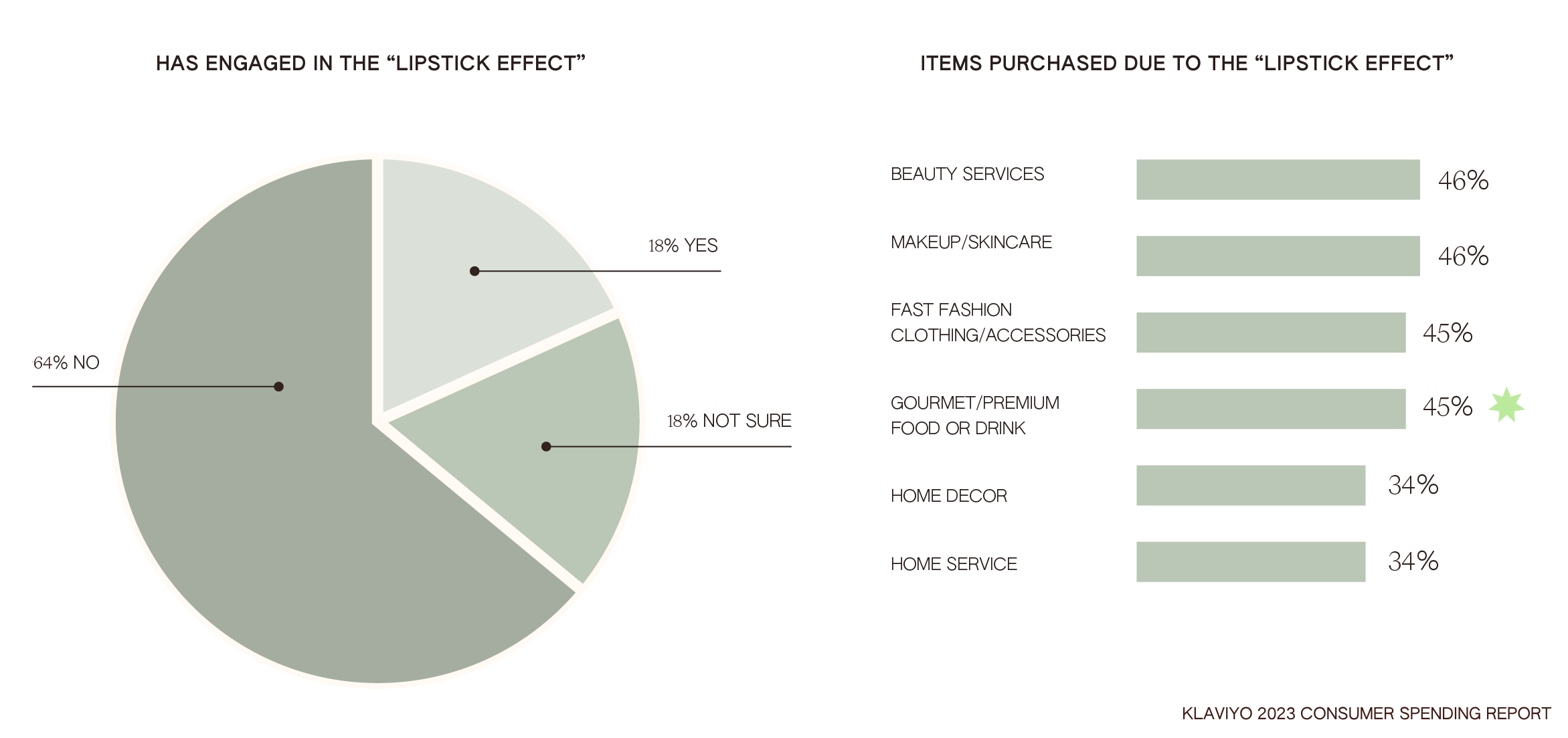
While less than 1 in 5 consumers have engaged in the “lipstick effect” during times of economic uncertainty, those who do are most likely to treat themselves to beauty services, makeup and skincare, fast fashion, or gourmet/premium food and drink.
Gen Zs and millennials are significantly more likely to engage in the “lipstick effect” during times of uncertainty compared to older generations.
When engaging in the “lipstick effect,” boomers+ are those most likely to purchase more gourmet/premium food or drink (58%), while Gen Zs are most likely to purchase fast fashion (58%). Both are likely to search for “dupes” of their luxury items. This presents a perfect opening for private label — especially during the holiday season as consumers continue to spend on food and beverage.
Current Economic Perceptions Leading to the Boom of Private Label
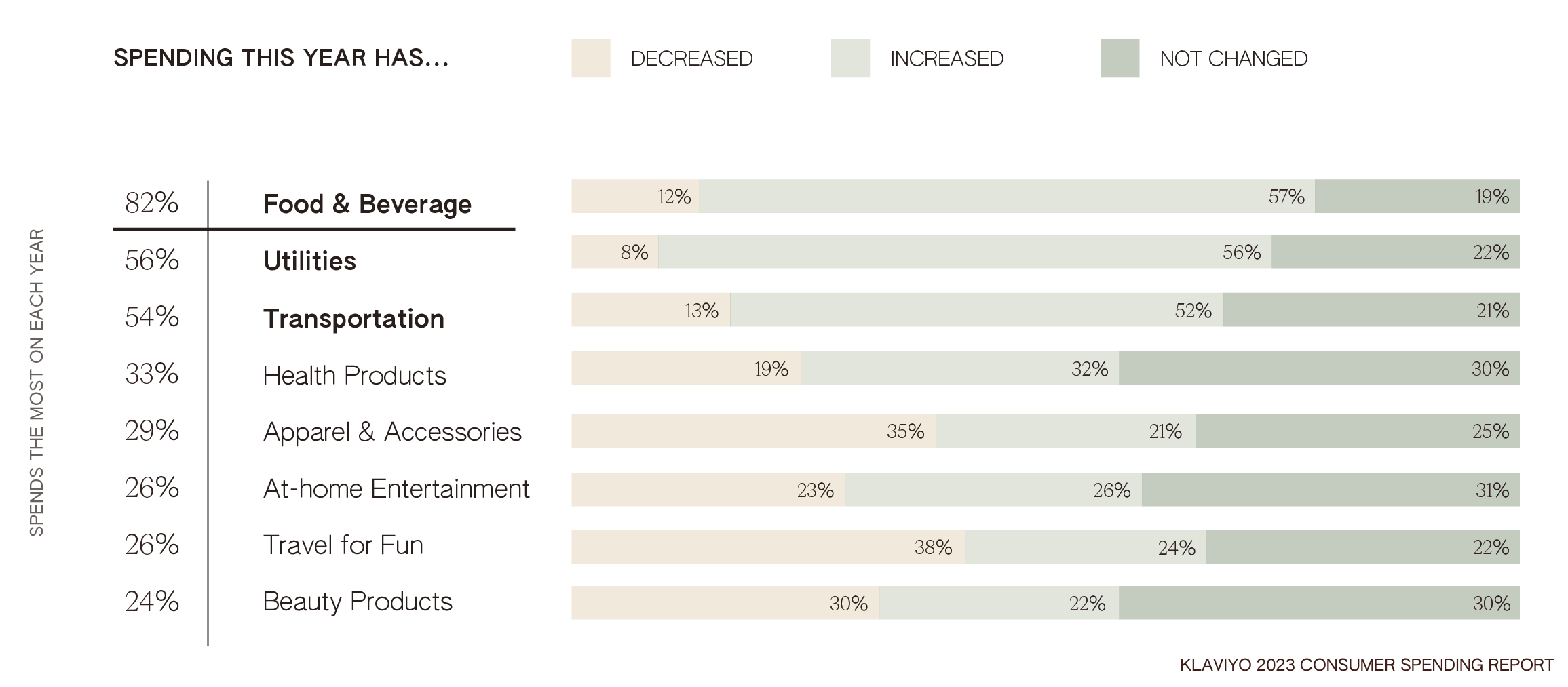
Over half of consumers feel negatively about the current state of the U.S economy and believe that the economy is on its way down, but 42% feel neutral or positive. How are consumers adjusting their spending behaviors to accommodate these perceptions?
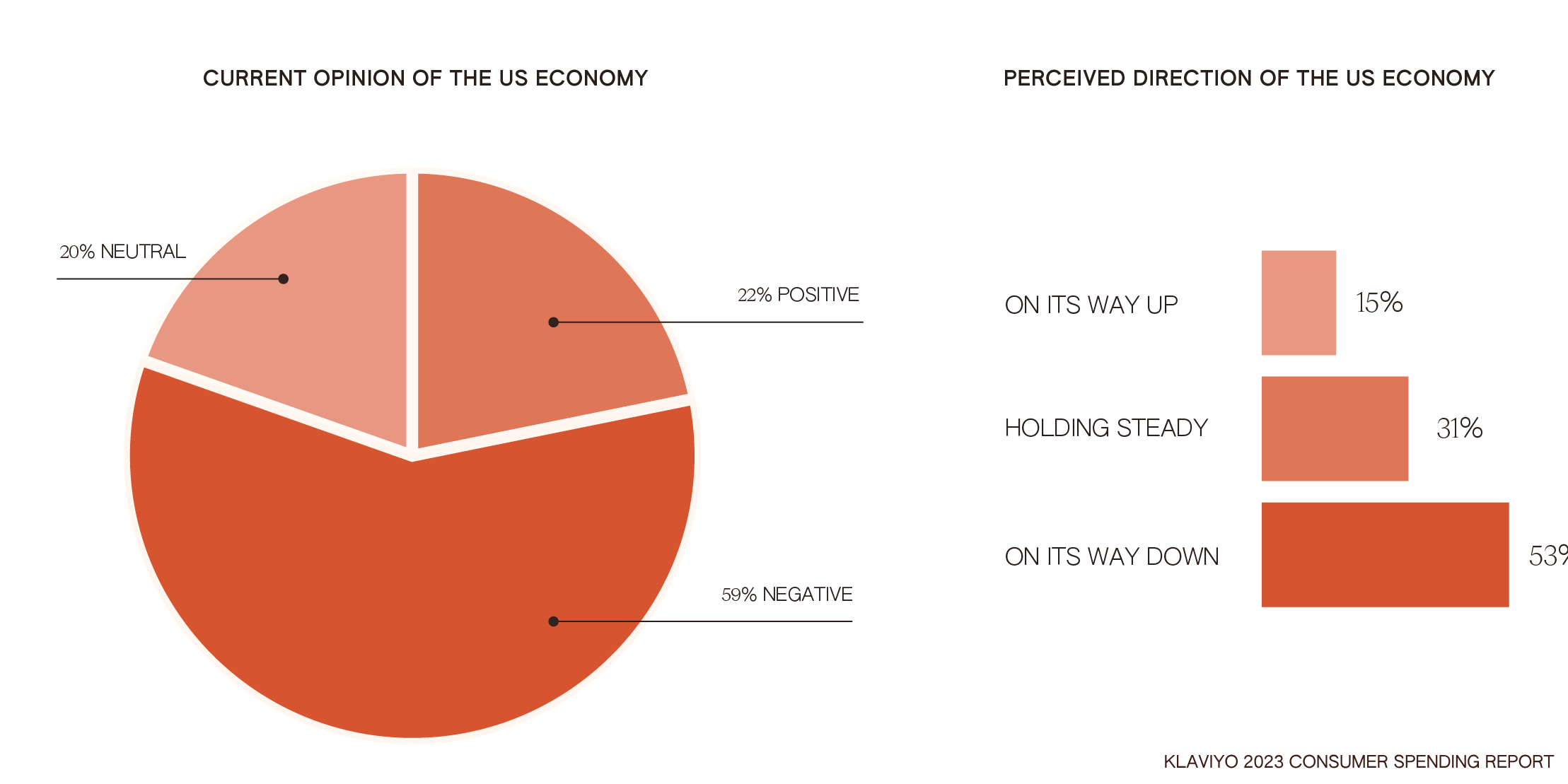
Compared to their older counterparts, Gen Zs and millennials are less likely to currently spend on or expect to increase spend on essentials. They’re more likely, meanwhile, to expect to increase spend in categories like food and traveling for fun — however, all consumers across the board are hesitant to make any larger purchases now and in the near future.
Deals and discounts are top drivers for both goods and services spend, while a desire for experiences is the primary influence on the services side. Of those who spend more money on goods, older generations are more interested in upgrades or replacements, while younger consumers are more interested in new products that enhance their environment, or simply collecting more belongings.
Economic Impact on Spending Behaviors
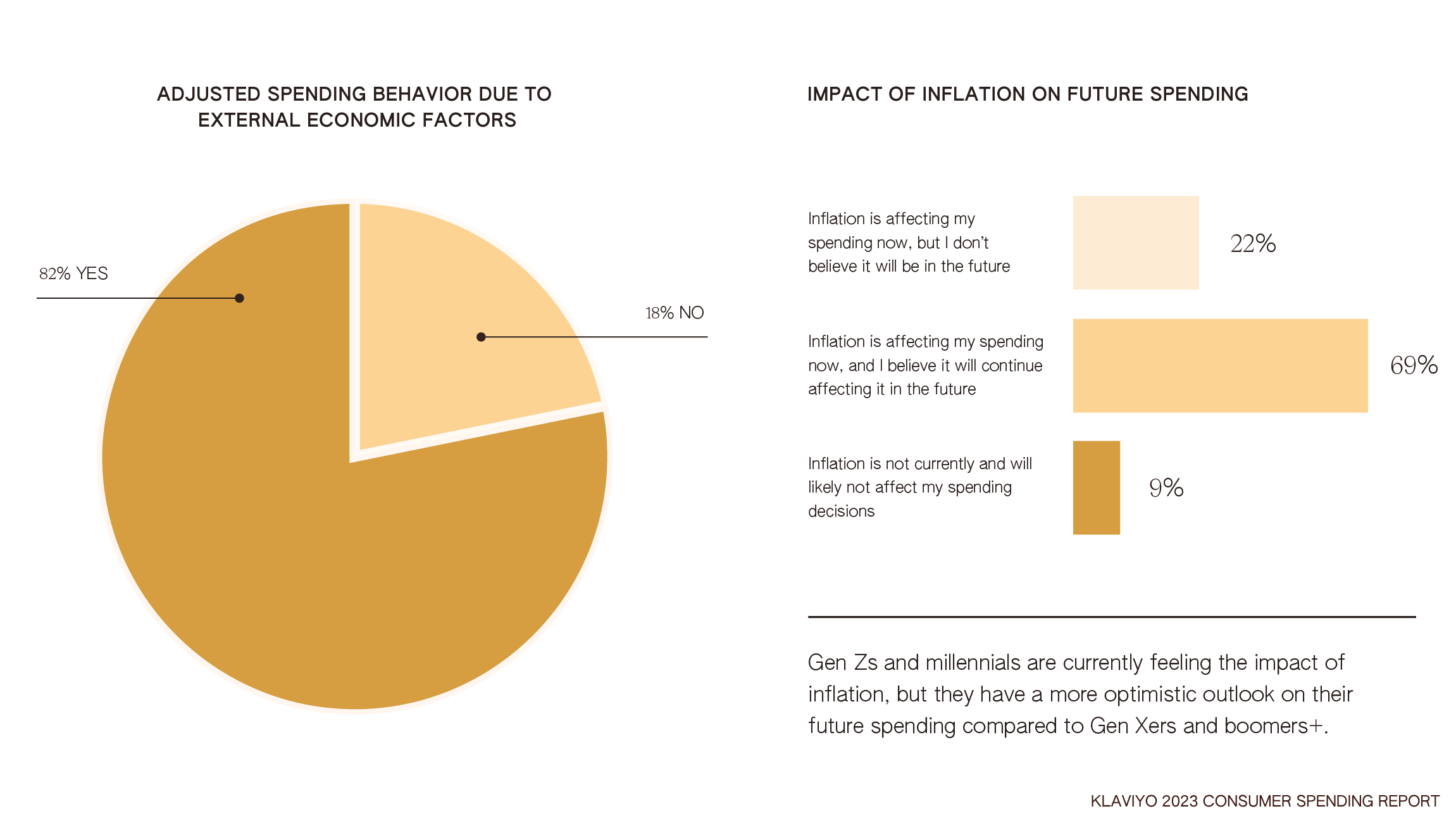
Over 4 in 5 consumers have adjusted their spending habits due to external economic factors. Similarly, most are feeling the impact of inflation now, and over two-thirds believe inflation will continue to impact their future spending—but 22% believe it won’t affect future spending.
Consumers are currently allocating most of their budgets to conventional goods.
Potentially due to their more positive economic outlook, younger consumers, particularly Gen Zs, are more likely to engage in the “lipstick effect” during times of economic uncertainty. They are more likely to increase their spend on goods and services this year compared to previous years, and more likely to feel comfortable spending on non-essentials.
Private label continues to be resilient in the face of uncertain economic times. Consumers steadily turn to private label products as a way to cut costs on the “essentials” as inflation rises.
FAQ
How are “dupes” leading to the boom of private label?
When engaging in the “lipstick effect,” boomers+ are those most likely to purchase more gourmet/premium food or drink (58%), while Gen Zs are most likely to purchase fast fashion (58%). Both are likely to search for “dupes” of their luxury items. This presents a perfect opening for private label.
What is driving the growth of “dupes” for consumers?
“Dupes” provide an affordable alternative to popular, high-ticket items. Overall, 40% of consumers would consider purchasing "dupes" as gifts, and the same amount would not mind receiving a "dupe" as a gift.
What age groups are more likely to engage in “dupe” culture?
Gen Zs and millennials are significantly more likely to engage in the “lipstick effect” during times of uncertainty compared to older generations.
How many consumers have adjusted their spending habits due to external economic factors?
Over 4 in 5 consumers have adjusted their spending habits due to external economic factors. Similarly, most are feeling the impact of inflation now, and over two-thirds believe inflation will continue to impact their future spending—but 22% believe it won’t affect future spending.
How are consumers adjusting their spending behaviors to accommodate economic perceptions?
Gen Zs and millennials are less likely to currently spend on or expect to increase spend on essentials. They’re more likely, meanwhile, to expect to increase spend in categories like food and traveling for fun. Deals and discounts are top drivers for both goods and services spend, resulting in the growth of private label.
SOURCE
KLAVIYO 2023 CONSUMER SPENDING REPORT
Get in Touch
Whether you have a general question or want to explore working together, use the form below and we'll get back to you soon.