

Are You Hydrated? Why the Beverage Industry is Thirsty for the Electrolyte Trend
For decades, hydration meant quenching thirst. A glass of water after a run. A soda from the vending machine. A sports drink on the sidelines. But today, hydration means so much more. It’s about function, recovery, and overall wellness, supporting consumers who want their beverages to work harder for them.
Electrolyte drinks, once reserved for athletes, are now a fixture in mainstream wellness. Global sales reached US$ 40.4 billion in 2024 and are projected to climb to US$ 53.1 billion by 2030, growing at a CAGR of 5.6% between 2025 and 2030 (Future Market Insights; Virtue Market Research). North America leads growth, with the U.S. market alone expected to rise from US$ 15 billion in 2025 to US$ 19.88 billion in 2030.
Here we’ll trace the origins, science, consumer demand, and demographics behind the surge - and highlight why private label electrolyte beverages represent one of the most compelling opportunities in the beverage aisle today.
Origins of the Electrolyte Drink Trend
The electrolyte story begins in the 1960s, when researchers at the University of Florida developed Gatorade to help athletes replenish fluids and salts lost through sweat. For decades, electrolytes remained tied to sports culture, symbolized by neon bottles on locker room benches.
But consumer demand eventually shifted. By the 2000s, hydration had leapt from sidelines to center stage, expanding into ready-to-drink waters, functional sodas, and stick-pack powders. The cultural reframe was clear: hydration was no longer just about athletic recovery, but daily self-care.
A 2025 FoodNavigator report described electrolytes as “a must-have for fitness fanatics,” yet the appeal has stretched well beyond gyms to include office workers, parents, and older adults seeking healthier options. Between sitting at a desk all day to working in the heat, it can be easy to forget to hydrate, which is where electrolyte drinks come in handy. The cultural shift became: Hydrated = Healthy.
The Science of Electrolyte Hydration Drinks
Backing up a bit - let’s talk about electrolytes, and how they lead to hydration. Electrolytes are charged minerals: sodium, potassium, calcium, magnesium, chloride, phosphate - that regulate vital processes in the body. They:
- Balance fluids inside and outside cells
- Support nerve signaling and cognitive performance
- Enable muscle contraction and recovery
Clinical research in Nutrients (2025) confirms that commercial electrolyte beverages improve hydration markers compared with water alone [Boyd-Shiwarski et al., 2025]. Other randomized crossover trials show electrolyte-fortified drinks reduce thirst perception and aid fluid retention better than plain water [Gao et al., 2025].
Of course, balance matters. Excess sodium or misformulated blends can undermine health. Clinical studies stress the importance of balanced formulations that avoid overconsumption while still delivering functional benefits [Institute of Medicine / National Academies, 2005]. For retailers, this means product selection and claims must be credible, transparent, and scientifically grounded.
Consumer Functional Health Drivers and Preferences
It is nothing new that consumers are demanding more from their beverages. This is why electrolytes are thriving in the functional beverage space - they align with modern consumer values:
- Wellness mainstreaming: Hydration is self-care. Consumers see functional beverages as part of their daily routine, not just athletic recovery.
- Convenience & formats: From low-sugar RTD sodas to travel-ready sachets, electrolytes meet consumers in every moment of need.
- Ingredient transparency: Clean-label, reduced-sugar formulations outperform legacy sports drinks. In 2025, growth is fueled by health-conscious buyers wary of excess sugar [Coherent Market Insights, 2025].
- Lifestyle integration: From heatwaves to remote work, electrolytes provide an answer in diverse contexts: whether in a construction zone, at a music festival, or behind a laptop during a long day.
A Look at the Label - Top purchase priorities include:
- Clean-label & natural origins – coconut water, sea salt, fruit-derived minerals, and claims like “no added sugar,” “non-GMO,” or “organic electrolytes.”
- Functional benefits beyond hydration – electrolytes paired with collagen, adaptogens, antioxidants, immunity boosters, or caffeine. Consumers seek multi-tasking beverages with claims such as “hydration + focus” or “electrolytes + recovery.”
Flavor trends reinforce this shift: citrus remains the category anchor, while tropical and exotic fruits are expanding, especially in sparkling and health-focused beverages.
Consumer demand appears durable, not fleeting: functional beverage expansion is one of the fastest-growing global categories, buoyed by health consciousness and lifestyle integration [The Business Research Company, 2025].
TikTok is accelerating the conversation. Searches for hydration grew 363.8% year-over-year between Aug 2024–July 2025, with forecasts for another 95% increase into 2026 (Spate, 2025). Top associated terms include “water bottle,” “powder,” and “packet,” signaling ongoing demand for both RTD and powder formats.
Demographics and Consumer Segments
Electrolyte beverages have crossed generational and lifestyle boundaries:
- Athletes & fitness enthusiasts remain the base, but now share shelf space with…
- Millennials & Gen Z, who fuel growth with wellness culture and influencer-driven awareness.
- Older adults, drawn to hydration plus low-sugar benefits.
- Heat-exposed workers and situational buyers (festival-goers, travelers, outdoor laborers) who prize function over flavor.
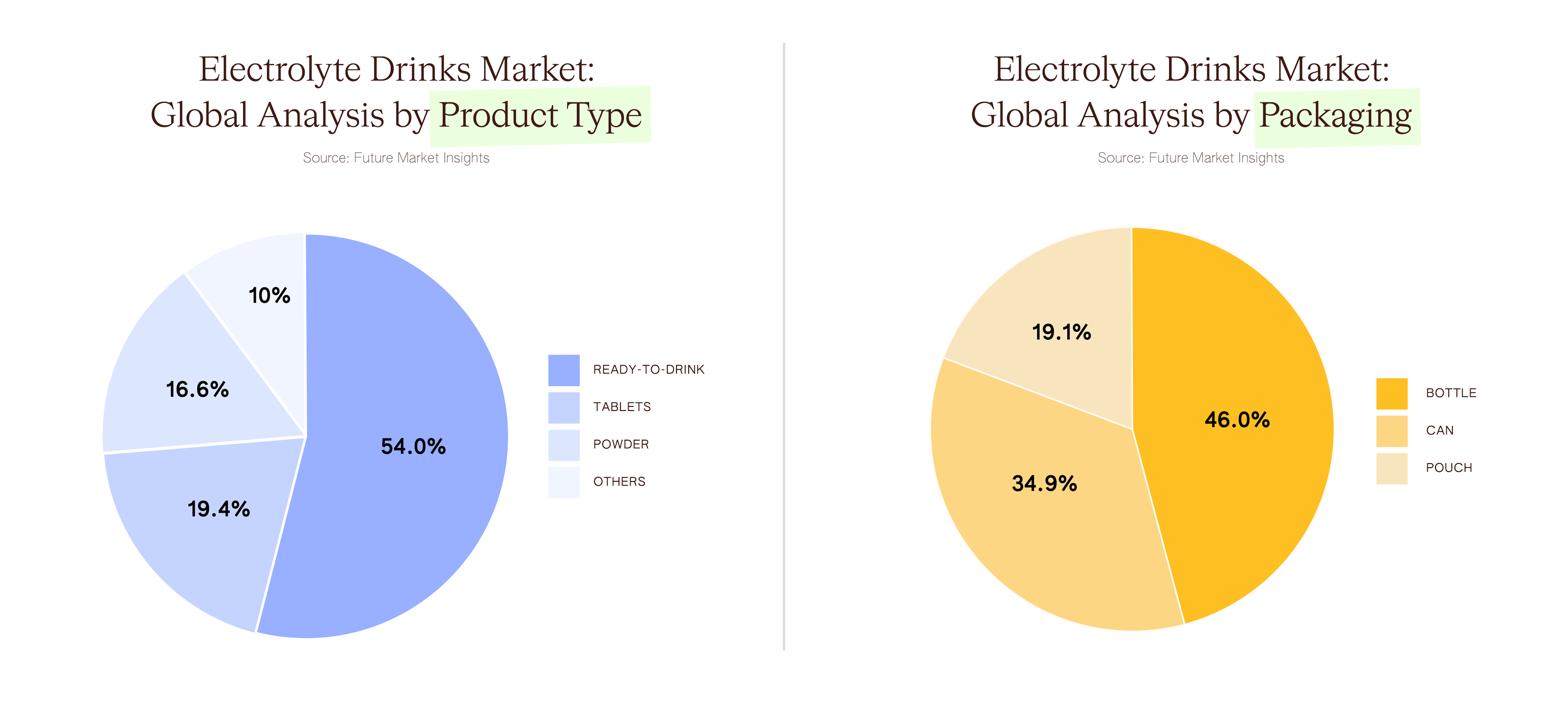
Even format preferences split by age: younger consumers favor powders for portability and customization, while older shoppers gravitate toward RTD cans and bottles. This demographic nuance underscores the opportunity for multi-format portfolios under retailer brands.
Key Takeaways
- Hydration is evolving. Consumers now see electrolyte beverages as part of their daily wellness routine.
- Science builds credibility. Transparent, balanced formulations backed by research continue to separate leading brands from the rest.
- Format innovation wins. RTDs, powders, and functional pairings (like electrolytes + focus or recovery) keep pace with diverse lifestyles.
- Private label can take the lead. Retailers have a unique opportunity to deliver clean, functional, great-tasting options that earn loyalty and shelf space.
- The category is just getting started. With U.S. sales projected to approach $20 billion by 2030, electrolyte beverages represent one of the strongest growth engines in functional drinks.
Conclusion
Hydration has become performance-oriented, wellness-focused, and lifestyle-integrated. With U.S. sales set to rise to US$ 17.2 billion by 2030, electrolyte beverages offer both a durable consumer solution and a strategic category growth lever.
For retailers, the opportunity lies in leading with private-label innovation—where taste, function, and value align. Private Label Electrolyte powders and Electrolyte sodas sit at the intersection of consumer demand and category expansion, ready to deliver incremental growth and reinforce wellness leadership at shelf.
At FedUp Foods, we believe the future of hydration is functional and refreshing. Electrolyte sodas are where taste meets science, and where retailers can meet consumers in their daily wellness journeys.
Get in Touch
Whether you have a general question or want to explore working together, use the form below and we'll get back to you soon.


