
Take a walk down the beverage aisle today and the shift is hard to miss. Drinks aren’t just competing on taste or brand anymore, they’re increasingly defined by what they do: Focus. Hydration. Gut health. Sleep. Mood.
Functional beverages have officially evolved from a transient trend into part of daily consumer routines, evaluated primarily by the practical health outcomes they deliver rather than just taste or branding. This shift is fueled by evolving habits, such as GLP-1 usage, replacing traditional supplements with convenient drinks, and expanding non-alcoholic options, demanding clear, trusted functional benefits. Meanwhile, private label brands are accelerating innovation by using real-time consumer insights to rapidly launch differentiated, multi-benefit products. Ultimately, the brands that win will be those that integrate seamlessly into everyday life.
The Shift of Beverages to Support Hydration, Gut Health, Focus, and Energy
It wasn’t long ago that a beverage choice was driven by a single question: what sounds good right now? That framing is quickly disappearing. Today, beverages are expected to play a role. They hydrate, support gut health, replace alcohol, improve focus, or fit into a morning or evening ritual. In that shift, drinks have moved from impulse purchases to intentional ones.
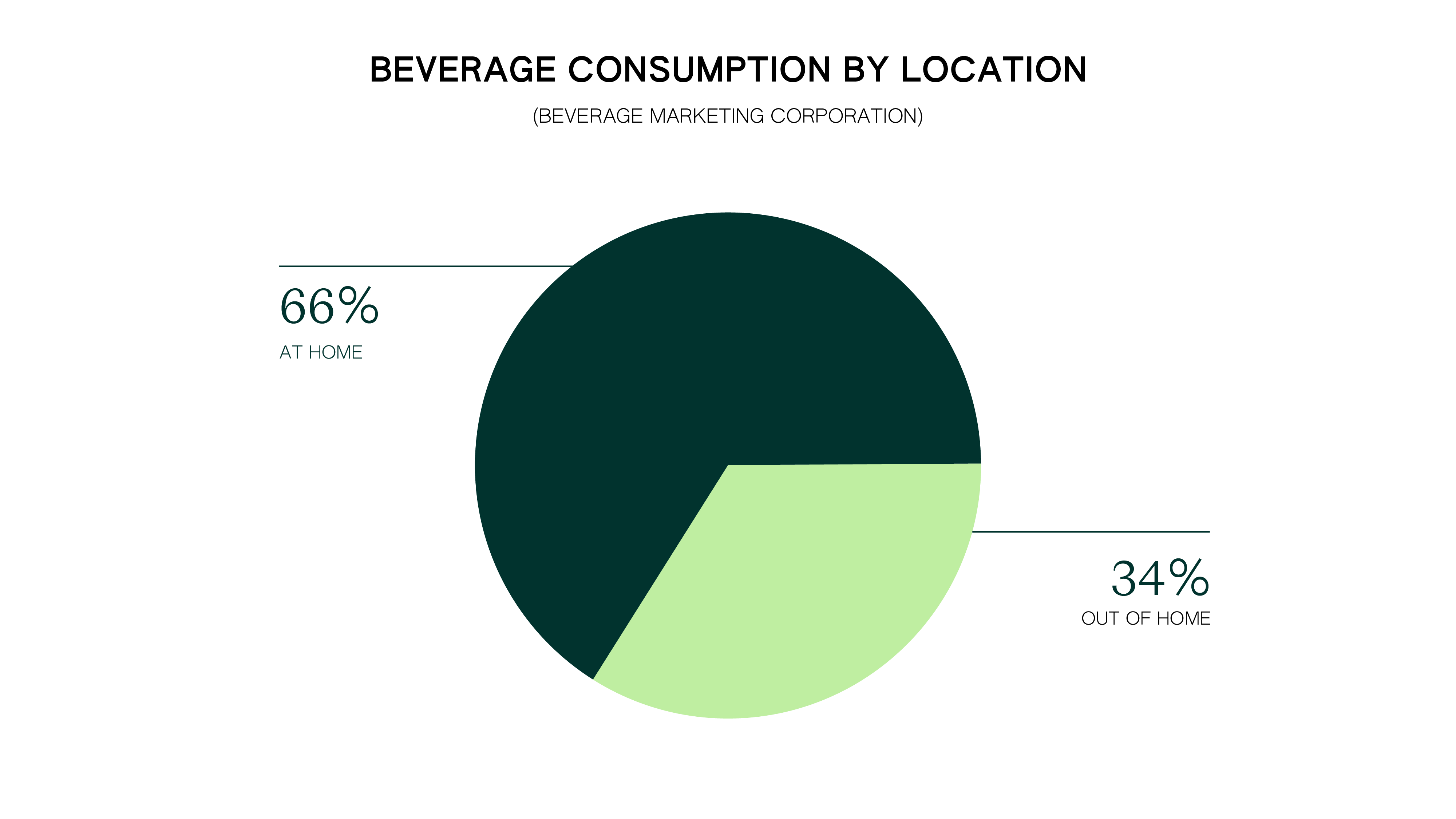
That change in behavior is reshaping where and how beverages are consumed. More than 66% of beverages in the U.S. are now consumed at home, a meaningful increase from pre-2020 patterns when on-the-go occasions made up a larger share of the category. What began as a pandemic-driven reset has held. Consumers built new routines at home and kept them, from functional morning beverages to alcohol alternatives in the evening. The result is a more controlled, repeatable consumption environment where value, trust, and consistency matter more than ever.
That context helps explain the parallel rise of private label. As consumption shifts into the home, shoppers are making more frequent, lower-risk decisions within retail environments they already trust. At the same time, the quality gap between private label and national brands has narrowed significantly, especially in functional and better-for-you segments. Retailers are responding by investing more strategically in their own brands, not just to offer value, but to meet evolving consumer expectations with speed, flexibility, and margin advantage.
Functional and better-for-you beverages continue to outpace total beverage growth, with several subsegments posting double-digit gains over the past two years (SPINS, 2025). Globally, the category is projected to grow at a 7–9% CAGR through the end of the decade, well ahead of traditional carbonated soft drinks (Mintel, 2025). In the U.S., non-alcoholic alternatives surpassed $1 billion in sales in 2025 (NielsenIQ). At the same time, private label food and beverage sales exceeded $236 billion in 2024, with penetration continuing to rise as quality perception improves (PLMA, 2025).
This is a redefinition of what a beverage is expected to do and where it fits in daily life.
Functional Beverages Are Now Built Into the Day for Calm, Focus, and Fewer Afternoon Slumps
Functional beverages evolved in layers. Sports drinks established hydration as performance. Energy drinks normalized stimulation. Enhanced waters introduced vitamins and antioxidants. More recently, probiotics, adaptogens, and nootropics entered the mix.
What changed is frequency.
These products are now part of repeatable daily routines. Morning hydration before coffee. Midday resets. Evening wind-down rituals. Consumers are now relying on functional beverages.
That shift has changed how products are developed. At FedUp Foods, formulation conversations increasingly start with context rather than ingredients. Where does this product fit in the day? What role does it play? Products that cannot answer that question struggle to drive repeat purchase.
The Macro Forces Reshaping the Beverage Category Resulting in the Boom of Protein, Fiber, and More
Several structural shifts are influencing both formulation and consumer behavior. These emerging signals are already visible in the data.
- GLP-1 Is Changing Consumption Patterns
GLP-1 medications are beginning to influence how people approach food and beverage.
Roughly 12% of U.S. adults report having used a GLP-1 drug, representing about 9 million people (KFF, 2024). That number could reach 24 million by 2035 (Morgan Stanley).
These consumers tend to prioritize efficiency:
- Lower sugar
- Higher nutrient density
- Satiety support
- Digestive comfort
This is contributing to growth in protein-forward beverages, fiber-enhanced drinks, and hydration formats that deliver more than refreshment. The shift is less about restriction and more about making each consumption moment count.
- Beverages Are Replacing Supplements in Daily Use
Consumers increasingly prefer to drink their benefits.
While the supplements market continues to grow, beverages are capturing more daily usage occasions because they are easier to integrate into routines and more likely to be used consistently.
This is driving growth in:
- Magnesium-based relaxation drinks
- L-theanine for focus
- Prebiotic and probiotic formulations
- Mushroom-based blends for mood and cognition
SPINS data shows strong momentum in functional ingredients moving into beverage formats, particularly in gut health and stress support (SPINS, 2025). Awareness often begins in supplements, but adoption tends to scale in beverages.
- The Non-Alcoholic Shift Is Now a Permanent Occasion
The non-alcoholic movement has moved beyond trend status.
With NA beer, wine, and spirits surpassing $1 billion in U.S. sales (NielsenIQ), the category is now firmly established. These products are showing up in social settings, evening routines, and at-home rituals.
Functional beverages are increasingly competing for those same occasions. That raises expectations. Products need to deliver both experience and function, not one or the other.
- Beauty and Wellness Continue to Converge
“Beauty from within” is gaining traction as part of daily consumption habits.
Mintel reports that more than 40% of younger consumers are interested in foods and beverages that support skin health (Mintel, 2025). Ingredients such as collagen, antioxidants, and botanical extracts are becoming more common in beverage formulations.
These benefits are cumulative rather than immediate. That creates opportunity for products that build trust through consistent use and clear positioning.
Familiar Ingredients, Clearer Benefits for your Gut Health and Hydration Routine
The ingredients driving innovation are not entirely new. Electrolytes, prebiotic fibers, magnesium, L-theanine, and functional mushrooms are all well established.
What has changed is consumer familiarity.
Shoppers increasingly understand what these ingredients do at a high level, which lowers the barrier to trial. At the same time, clean label expectations have become baseline. Low sugar, recognizable ingredients, and transparent sourcing are no longer differentiators on their own.
Growth is concentrated in clearly defined benefit areas:
- Digestive health
- Advanced hydration
- Mood and stress support
- Beauty-related benefits
Consumers are not starting with ingredient lists. They are starting with intent. The products that win are the ones that communicate their role quickly and deliver on it consistently.
Private Label Is Moving Into an Innovation Role in Functional Beverages
One of the most important shifts in 2026 is happening within private label. Retailers are stepping into a more active role in shaping what comes next, using private label not just to participate in trends, but to help define them. They are entering emerging functional spaces faster, expanding access to premium ingredients, and testing new concepts with less risk.
Here is the paradox at the center of this shift: dupe culture may start with imitation, but the retailers gaining the most ground are using it as a launchpad for genuine differentiation. The most compelling innovation in beverage aisles today isn’t about copying branded products, it’s about leveraging demand signals to develop what branded competitors haven’t yet brought to market. With access to point-of-sale data, loyalty programs, and direct customer feedback, retailers have insight into shopper behavior at a level of granularity most CPG companies can’t match.
That insight is fueling the rise of multi-benefit formulations, often referred to as “functional stacking.” Consumers are looking for beverages that deliver on multiple fronts: a prebiotic soda that supports energy, a protein coffee with adaptogens, or a hydration drink fortified with collagen. While branded players often spark these ideas, retailers paired with the right manufacturing partners can move faster, test more aggressively, and scale what works.
At FedUp Foods, we’ve seen this shift firsthand. A few years ago, most conversations centered on matching benchmarks. Today, they center on building something new; from functional beverages made with Regenerative Organic Certified® ingredients to clean-label formulations designed for daily use, and products where sustainability is a baseline expectation. The pace has accelerated, and so has the ambition. Private label has become a credible platform for innovation, with the capability to shape the future of the beverage aisle.
TL;DR - Where the Category Stands
Functional beverages have moved from trend to routine. Consumers are no longer reaching for these products occasionally. They are building them into daily habits, from morning hydration to evening wind-down. Expectations have shifted with that change. Beverages are now evaluated by the role they play and the outcomes they deliver, not just taste or brand.
Several forces are shaping this shift. GLP-1 usage is driving demand for more efficient, nutrient-dense options. Beverages are replacing supplements as a more convenient and consistent way to consume functional benefits. Non-alcoholic options have opened new occasions, while beauty and wellness continue to overlap. Across all of it, consumers are gravitating toward benefits they understand and trust.
Private label is helping accelerate what comes next. Retailers are using real-time consumer insight to move faster, test more precisely, and bring new concepts to market with confidence. What starts as imitation is quickly turning into differentiation, especially through multi-benefit formulations that deliver more in a single product.
At the end of the day, the products that will grow are the ones people naturally reach for, the ones that fit easily into their routines, make sense at a glance, and quietly do what they promise, day after day.
Sources
- NielsenIQ, Non-Alcoholic Beverage Market Trends, 2025
- SPINS, Functional Beverage Category Insights, 2025
- Mintel, US Functional Drinks Market Report, 2024–2025
- Beverage Marketing Corporation, U.S. Beverage Consumption Data, 2024
- KFF Health Tracking Poll, GLP-1 Usage in the United States, 2024
- Morgan Stanley Research, GLP-1 Market Forecast, 2024
- PLMA, Private Label Industry Overview, 2025
Get in Touch
Whether you have a general question or want to explore working together, use the form below and we'll get back to you soon.

.jpg)
.jpg)


